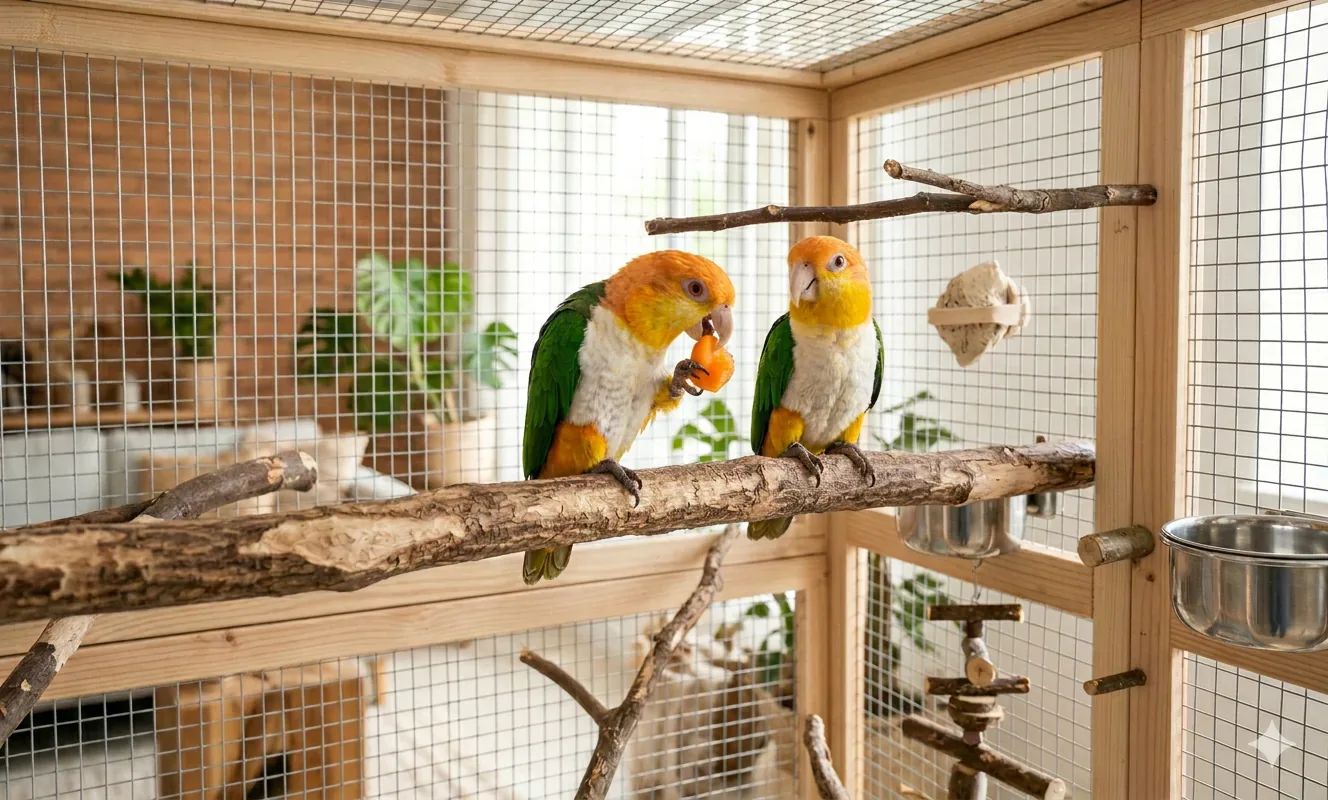
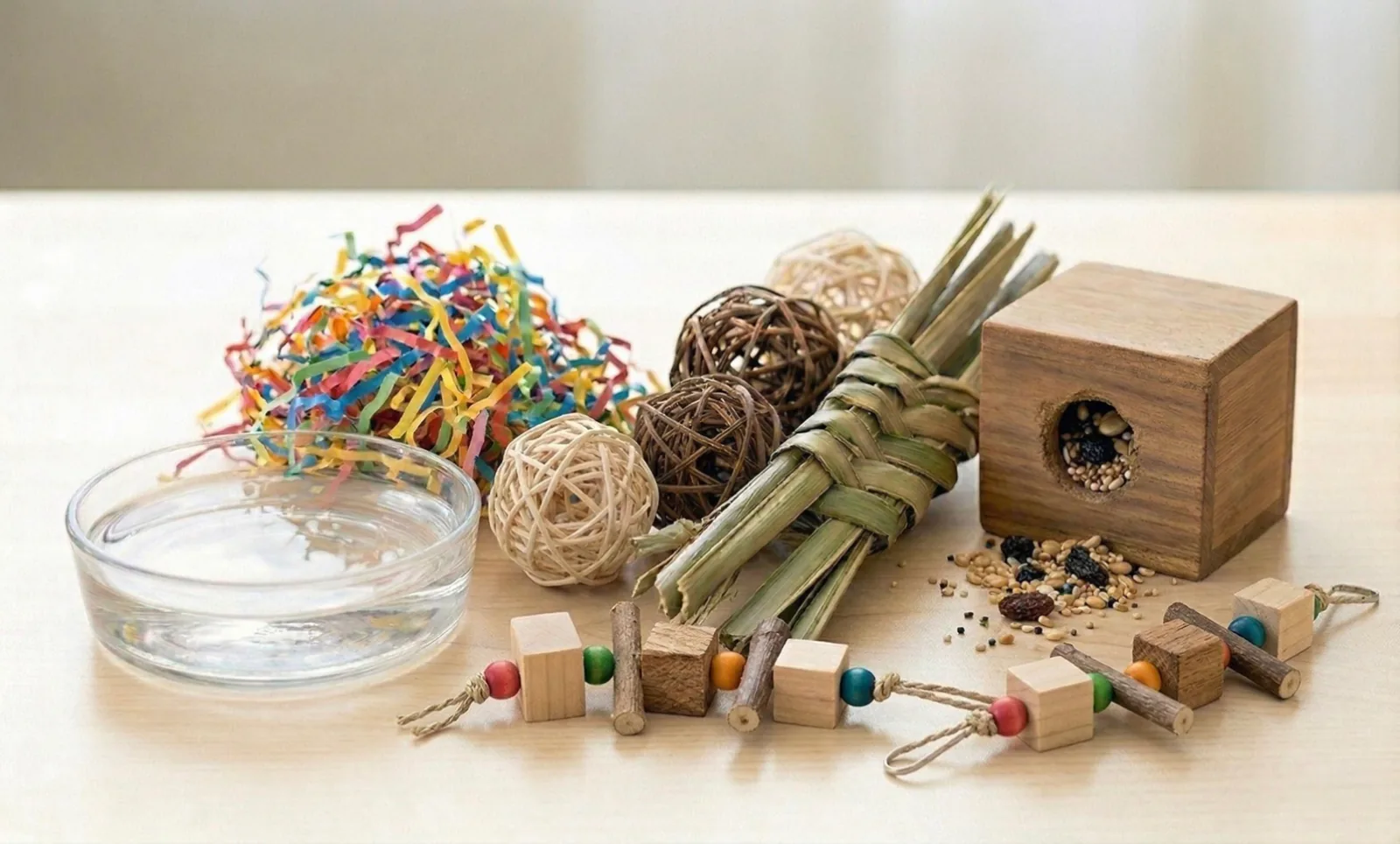
Many owners assume seeds are a parrot's main food, but in reality the diet should be varied. In the wild, parrots move a lot and eat more than just seeds, and at home they do best with balanced nutrition where fresh vegetables make up a large part of the daily menu. Fruits, berries, and seeds can absolutely be part of that diet, but they should not be the only thing on it. That approach helps a parrot stay energetic, keep a strong immune system, and maintain healthy bright feathers.
Healthy foods parrots often enjoy
- Vegetables and greens: bell pepper, carrots, broccoli, zucchini, pumpkin, romaine lettuce, and dandelion greens.
- Fruits and berries: apple without seeds, blueberries, raspberries, peeled citrus, pomegranate, and bananas.
- Other useful options: sprouted grains such as mung beans or lentils, cooked unsalted grains like buckwheat or brown rice, and branches from fruit trees for chewing.
Important note about seeds
Seeds and grain mixes can be part of a healthy parrot diet, and many birds genuinely enjoy them. The issue starts when they make up almost the whole menu. Seeds are fairly fatty and do not cover every vitamin and mineral a parrot needs, so without vegetables, greens, and other foods the diet becomes less balanced. The best approach is to keep seeds as one part of a varied diet rather than the only foundation of it.
Tips
- Hygiene matters: wash produce well, and do not leave fresh vegetables or soft foods in the cage for more than a few hours.
- Fresh water is essential: use clean filtered water and change it daily because bacteria multiply quickly in bowls.
- Introduce new foods gradually: if your parrot eats only seeds, finely chop vegetables and mix them with a small amount of favorite seeds so the bird gets used to healthier food step by step.
- Some foods are strictly off limits: never give avocado, chocolate, alcohol, caffeine, onion, garlic, bread, dairy products, or salty and fried food from your own meals. Avocado is especially dangerous for parrots.
- Do not forget calcium: keep a cuttlebone in the cage because it supports bone strength and beak health.