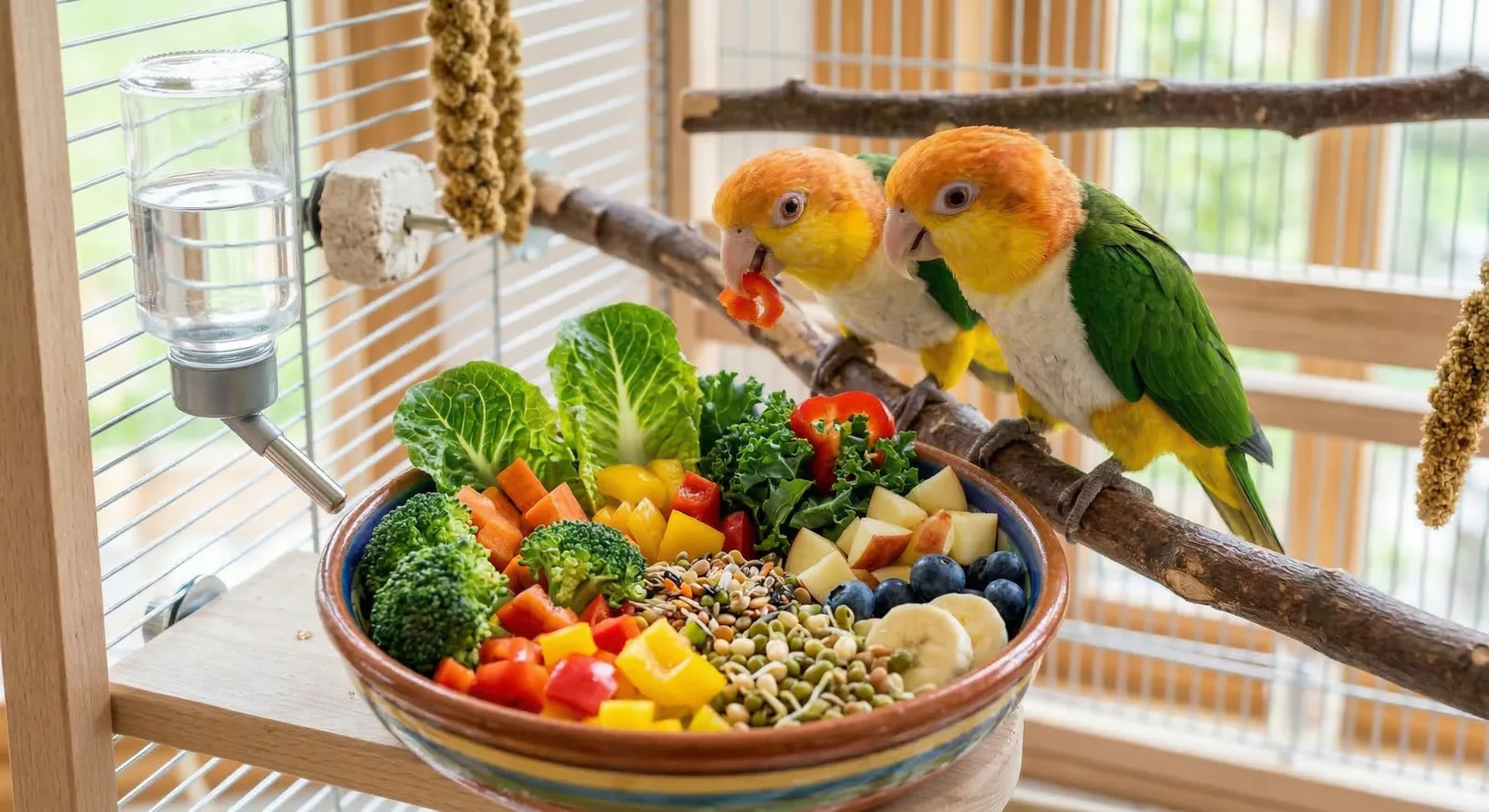
Many people think a parrot only needs a mirror and a full food dish to be happy. In reality, poor cage setup is one of the most common reasons birds develop foot problems, beak issues, and signs of stress or depression.
If you want your feathered companion to stay active and healthy, its home should feel as close to a natural environment as possible. Here is what should be in a parrot cage for health and comfort.
Space matters
A cage is not a prison. It is a safe home. It should be large enough for the bird to fully spread its wings without touching the bars or toys, move and hop from perch to perch, and choose different places to sit during the day.
If a parrot is forced to stay in one spot all the time because the cage is too cramped, its muscles weaken over time and excess weight becomes more likely.
Natural perches and resting spots
One of the first things people notice in a new store-bought cage is the set of smooth plastic perches. Those are better removed right away.
- Why plastic is a problem: it is too hard and always the same diameter, which can lead to painful pressure sores on the feet.
- What to use instead: natural branches with bark such as willow, apple, birch, or hazel.
- Different thicknesses matter: when perches vary in size, the bird's feet keep working and exercising naturally.
- Wide branches for rest: a few thicker branches give the feet a place to rest more flatly so the joints can relax.
Outdoor branches are fine, but only after cleaning
Bringing in branches from outdoors can be a great idea, but bark may carry dirt, bacteria, or residue.
- Collect branches away from roads.
- Wash them thoroughly with a stiff brush under running water.
- Pour boiling water over them, which helps reduce the risk of harmful microorganisms.
Thin chew branches are essential
Besides the main perches, parrots need thin small branches they can safely chew through. Willow is especially useful because it is flexible and easy for birds to shred. Chewing helps wear down the beak, works the jaw, and gives the bird a natural activity.
Cuttlebone and minerals for beak and claw care
A parrot's cage should always include tools for natural beak and claw maintenance.
- Cuttlebone: a good source of calcium and a safe way to wear down the beak gently.
- Mineral block: adds extra support for beak wear and mineral intake.
- Natural bark: rubbing against real branches helps claws wear down in a natural way.
Toys should be natural and safe
Parrots are highly intelligent birds, so they get bored quickly without proper enrichment. The best toys are wooden toys or vine-based toys that can be safely chewed and even partly destroyed. That helps reduce stress and keeps the bird busy.
Mirrors are best avoided. Birds often treat their reflection as another bird, which can lead to frustration, obsessive behavior, and aggression.
Light and feeding hygiene
Direct sunlight can be beneficial, but do not let the cage overheat near a window. Because glass blocks UV rays, a dedicated bird lamp can be useful in winter if you follow the placement instructions.
A clean, well-organized feeding area also supports your parrot's health.
- Bowls: use stainless steel or ceramic bowls because they are more hygienic than plastic.
- Separate feeding: keep at least three containers: one for water, one for seed mix, and one for fruit and vegetables. This helps food spoil less quickly.
- Freshness: change the water every day, and remove leftover fruit and other moist food after just a few hours.
Quick checklist
- Enough room for flight and hopping.
- No plastic perches.
- Natural branches of different thicknesses, cleaned with boiling water.
- Small chew branches for daily shredding.
- Natural wooden toys without unsafe plastic.
- A separate water container.
- At least three separate containers: one for water, one for seeds, and one for fruit and vegetables.
- Steel or ceramic bowls.
- Cuttlebone and a mineral block for beak and claw care.
- In winter, indoor birds may benefit from a suitable bird lamp.
- No mirrors.