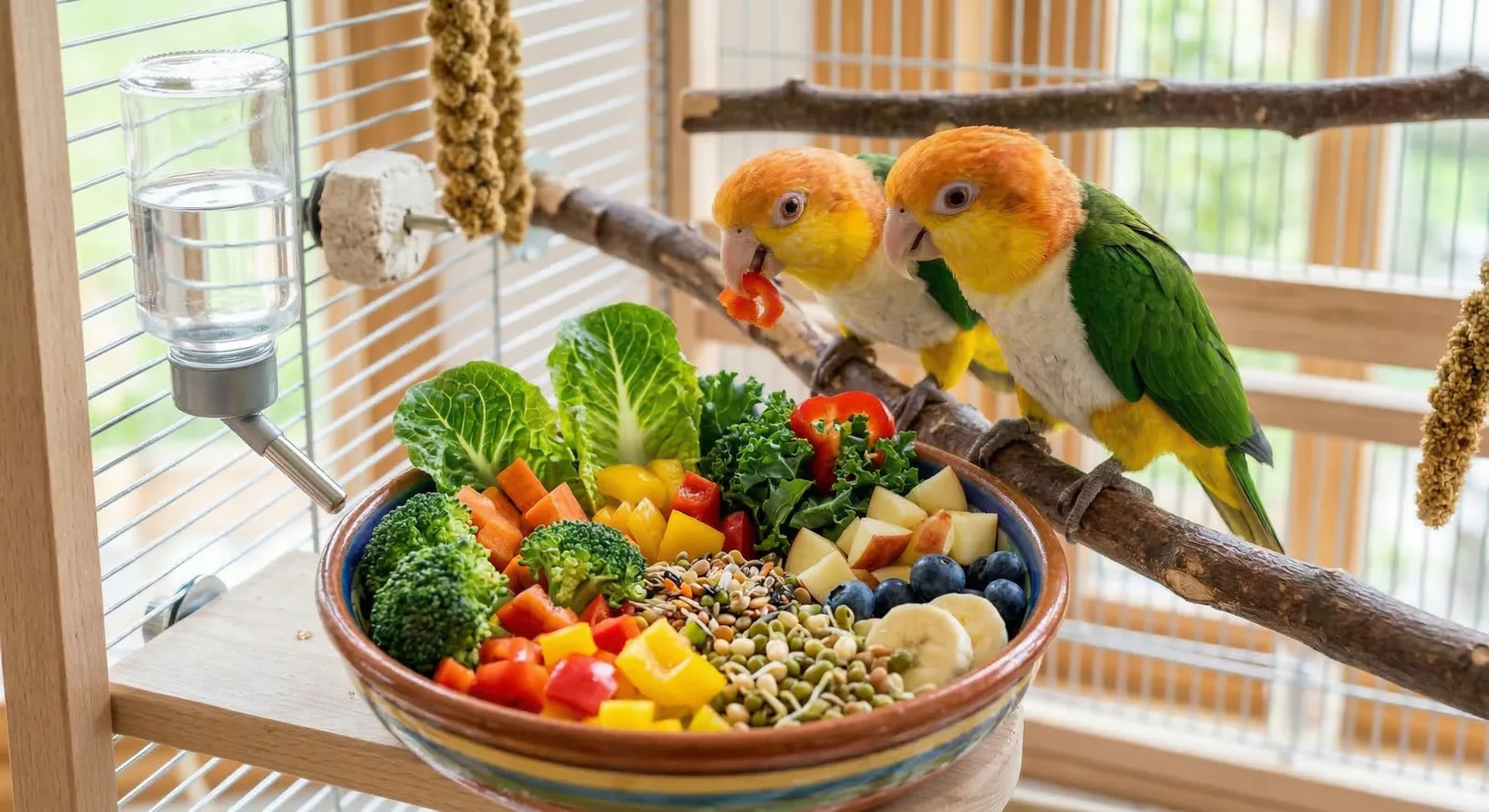
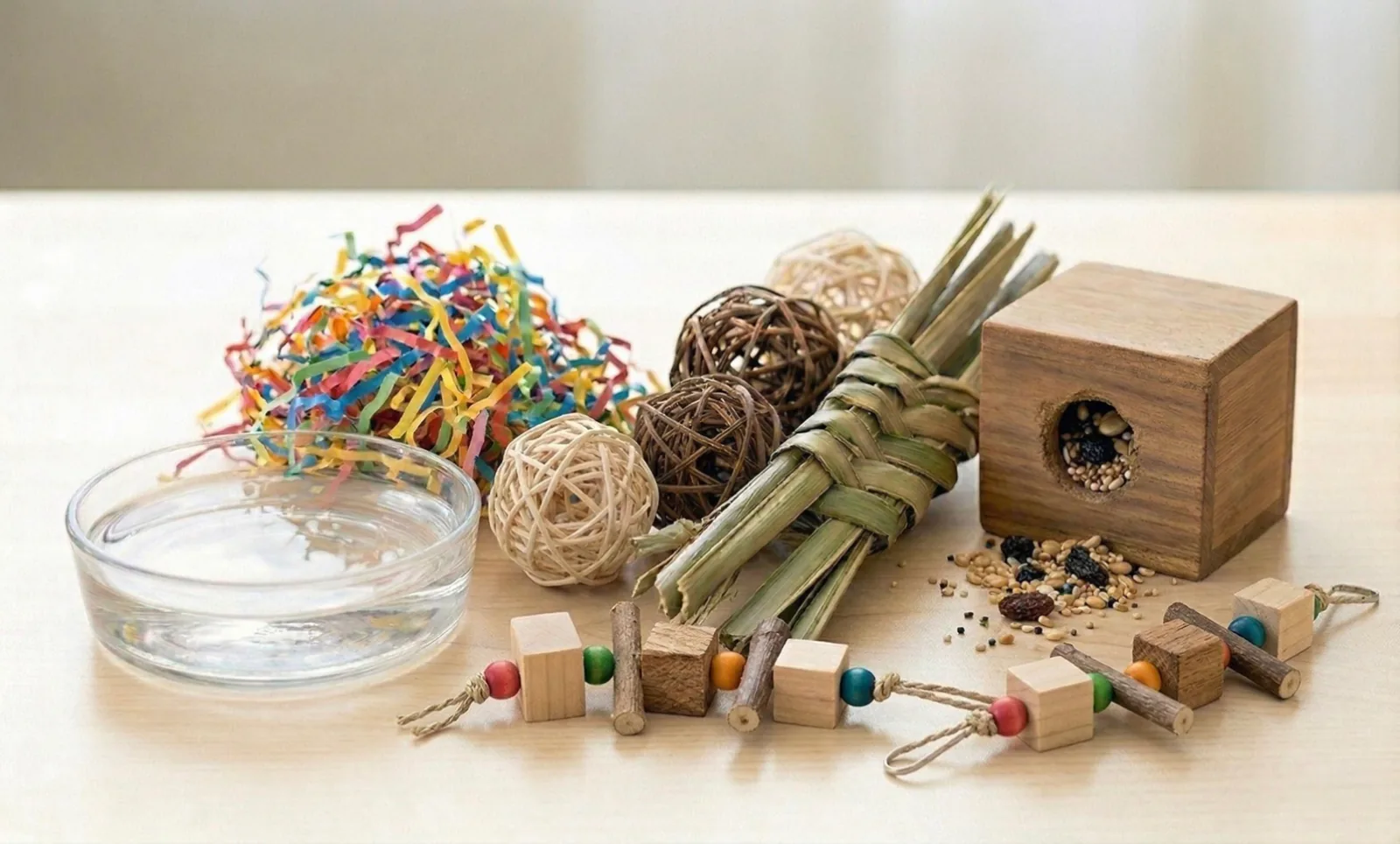
After moving to a new home, a parrot is usually under stress. New sounds, smells, people, and even the cage itself can feel frightening. That is why taming is not about forcing training, but about building trust step by step.
The safe haven phase during days 1-3
In the first days, your main job is not to rush contact. Put the cage in a quiet bright spot away from drafts and position it so the parrot sees you roughly at eye level rather than always from below. Many birds seem calmer this way than when a person constantly towers over them.
Just be nearby. Read aloud, work on your laptop, or talk softly on the phone. The bird needs time to get used to your silhouette, your movements, and the sound of your voice. At this stage, avoid putting your hands into the cage unless necessary, because to a frightened parrot a hand often looks like a threat.
Start with a calm gaze and slow movements
Parrots are highly observant and notice body language very well. A hard direct stare or a sudden movement toward the cage can make them tense. It is better to approach slowly, avoid hovering too close to the bars, and speak in a soft steady voice.
A relaxed brief glance is usually less stressful than staring. If your parrot stops freezing when you come near and begins eating, preening, or sitting more calmly in your presence, that is a good sign that trust is starting to form.
The way to trust is through treats
Once the bird seems a little calmer, treats can help a lot. Spray millet often works especially well for parrots. Start by offering it through the cage bars or near the open cage door without pushing your hand directly toward the bird.
As the parrot grows more comfortable taking food, reduce the distance little by little. If the bird hesitates, do not push forward. Staying at the same stage for a few more days is usually better than moving too fast.
Levels of trust: from finger to shoulder
Do not try to skip stages. First, it is enough for the parrot to take food calmly from your fingers. Later, you can gently offer a finger or a small perch just above the legs so the bird sees it as a stable place to step on.
Some parrots stay wary of hands for a long time but feel more comfortable sitting on a shoulder because it is a high and steady vantage point. Even so, it is best to move to that stage only when the bird no longer panics around you.
What you should never do
- Do not catch the parrot with your hands unless absolutely necessary: even one incident like that can set progress back badly.
- Do not make sudden movements near the cage: waving, running, or clapping can frighten the bird.
- Do not let the parrot out on the very first day: the cage should first become a safe place associated with food and water.
- Do not try to overpower fear: punishment and pressure do not create trust.
Safety for the first flight
Before opening the cage door for the first free flight, prepare the room. Birds do not understand where air ends and glass begins, so windows and mirrors should be covered with curtains or marked with stickers. It is also wise to close dangerous gaps between furniture and make sure there are no toxic houseplants in the room.
The first flight is best only when the parrot no longer panics around you and has a fair chance of returning calmly to the cage where the food and water are.
Predictability helps more than anything else. If you bring a treat at the same time each day, speak softly, and avoid scaring the bird, your parrot will start to see you as a safe and familiar part of its routine. That is how real trust grows.