The sky looks blue because white sunlight gets scattered by gas molecules in the atmosphere. Shorter wavelengths, especially blue, are scattered much more strongly than longer red ones, so blue light reaches us from all directions across the sky.
Explanation
This effect is called Rayleigh scattering. The atmosphere is full of tiny particles, mainly nitrogen and oxygen molecules, and they are especially good at scattering short-wavelength light. When we look at any part of the sky away from the Sun, we are seeing that scattered light, where the blue part of the spectrum stands out the most.
Details
At first glance, you might expect the sky to look violet because violet wavelengths are even shorter. But the Sun emits less violet light, part of it is absorbed higher in the atmosphere, and human eyes are more sensitive to blue than to violet. That combination is why the daytime sky appears blue. Clouds, meanwhile, look white or gray because large water droplets scatter nearly all colors more evenly.
Good to know
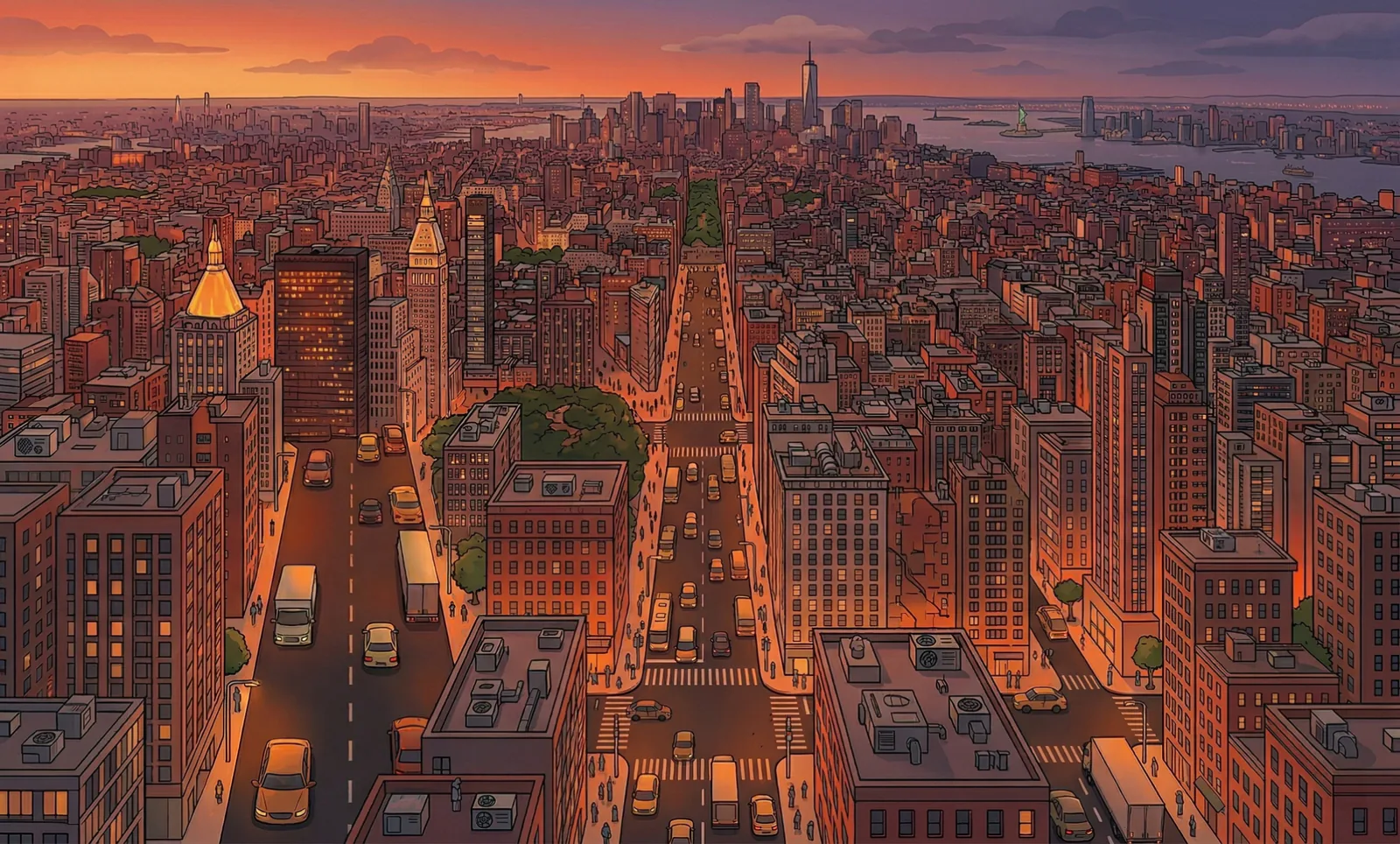
- Sunrise and sunset look warmer for the same reason: light travels through more atmosphere, more blue gets scattered away, and more red and orange reaches your eyes.
- The blue can look richer after rain: cleaner air means less dust and haze to dull the color.
- The sky would look black on the Moon, even in daylight: there is almost no atmosphere there to scatter sunlight.